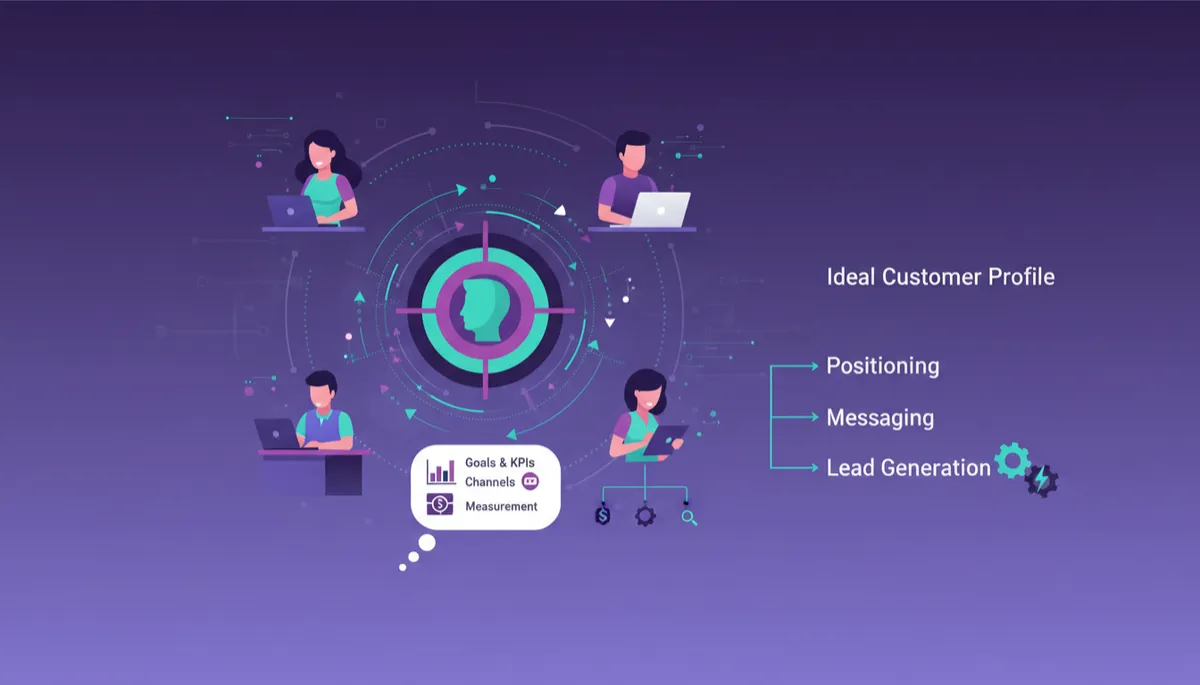
Marketing Strategy 101: Build an Ideal Customer Profile
Marketing Strategy, Ideal Customer Profile, Small Business
Who Are You Really Talking To? How an Ideal Customer Profile Anchors Your Marketing Strategy
A strong marketing strategy starts with knowing exactly who you’re talking to and why they should care. When you define a clear ideal customer profile and positioning, every decision—from your website copy to your social media posts—gets easier and more effective.
What Is a Marketing Strategy, Really?
Let’s keep this simple. Your marketing strategy is the plan for how you’ll attract, convert, and keep the right customers so your business can grow. It’s not just “doing some social media” or “running a few ads.” It’s the big-picture roadmap behind all those tactics.
The Core Components of a Solid Marketing Strategy
1. Goals and KPIs: What Does Success Look Like?
If you don’t know what you’re aiming for, it’s impossible to know if your marketing is working. Start by setting clear, realistic goals and key performance indicators (KPIs). For example:
- Increase monthly lead generation by 30% in six months
- Grow email list by 500 subscribers this quarter
- Book 10 more sales calls per month from your website
KPIs are the numbers you track to see if your marketing strategy is moving you toward those goals—things like website traffic, conversion rate, cost per lead, and return on ad spend.
2. Ideal Customer: Who Are You Really Talking To?
This is the heart of your strategy. Your ideal customer profile (ICP) is a clear, detailed description of the person or business that is the best fit for what you offer. When you know who that is, you can tailor your digital marketing, content, offers, and even your pricing to match what they actually need and value.
3. Positioning and Messaging: Why Should They Choose You?
Positioning is how you want to be perceived in your market. Are you the fast option, the premium option, the local expert, or the most hands-on support? Messaging is the words you use to communicate that position consistently—on your website, in emails, and in social media marketing.
When your positioning and messaging are anchored in a clear ideal customer profile, your marketing suddenly feels like a one-to-one conversation, not a shout into the void.
4. Channels: Where Will You Show Up?
Your channels are the places you’ll actually execute your marketing strategy. A few common ones for small businesses in Canada:
- Your website (and its web design and content)
- Social media platforms your customers actually use
- Email marketing and simple funnels using ai and marketing automation
- Paid ads (Google, Facebook, Instagram, LinkedIn)
You don’t need to be everywhere. You need to be where your ideal customer is paying attention.
5. Budget: How Much Will You Invest?
Your budget covers both time and money. How many hours per week can you realistically put into marketing? How much can you invest monthly in ads, tools, and support from a partner like Brandspot, a marketing agency in Ottawa that works with small businesses across Canada?
6. Measurement: What Will You Track and Adjust?
Measurement turns marketing from guesswork into a business decision. You might track:
- Website visits and where they come from
- Form fills, calls, or online bookings from each channel
- Cost per lead and cost per new customer
With simple dashboards and automation, you can use AI tools to help collect and visualize this data, so you can double down on what’s working and cut what’s not.
Why Your Ideal Customer Profile Should Come First
Most small businesses do this backwards. They pick channels first—“Let’s do TikTok!”—and then try to figure out what to say. That’s why so many posts and ads feel random and don’t drive real lead generation.
When you start with your ideal customer profile, you flip the script. You ask:
- Who do we serve best?
- What problems are they trying to solve right now?
- How do they like to buy?
Suddenly, your marketing strategy becomes less about trends and more about real people.
A Simple Step-by-Step Way to Build Your Ideal Customer Profile
Step 1: Look at Your Best Existing Customers
Think about the customers you’d love to clone. They’re profitable, easy to work with, and refer others. List three to five of them and ask:
- What type of business or person are they?
- What industry, location, or life stage are they in?
- What did they come to you for originally?
Step 2: Capture the Basics (Demographics and Firmographics)
- Age range, role, and income level (for consumers)
- Company size, industry, and location (for businesses)
- Decision-maker title (owner, manager, director, etc.)
This gives you a basic “who,” but we don’t stop there.
Step 3: Dig Into Their Problems and Priorities
This is where your marketing really gets sharper. Ask:
- What are they frustrated with right now?
- What results are they trying to get in the next 6–12 months?
- What might be stopping them from solving this on their own?
If you’re offering web development or web design services, for example, your ideal customer’s problem might not be “I need a website.” It might be “I’m embarrassed to send people to my site because it doesn’t reflect our brand,” or “Our site gets traffic but no inquiries.”
Step 4: Understand How They Research and Buy
Your ideal customer’s buying journey shapes your channel choices. Consider:
- Do they Google first or ask friends for referrals?
- Are they active on LinkedIn, Instagram, Facebook, or somewhere else?
- Do they prefer to book online, call, or visit in person?
Step 5: Turn It into One Clear Profile
Pull everything together into one short paragraph or one-page summary. For example:
From Ideal Customer to Clear Positioning: Connect the Dots
Once you know exactly who you’re talking to, you can craft positioning that speaks directly to them. A simple formula:
- We help [ideal customer]
- solve [specific problem]
- so they can [desired outcome or result]
For example: “We help Ottawa service-based businesses turn their website and social media into a reliable lead engine, so they can stop guessing at marketing and get back to running their business.” That’s clear positioning you can use on your homepage, in ads, and in sales conversations.
Why Having a Strategy Actually Saves You Time and Money
Less Wasted Spend
Without a strategy, it’s easy to “try” a bit of everything—boosted posts here, a random ad there—and then feel like nothing works. When your marketing strategy is anchored in a clear ICP and goals, you spend on the channels that actually reach your best customers, not just whoever happens to scroll by.
More Consistent Messaging
Consistency builds trust. When your ideal customer profile and positioning are clear, your website, emails, and social posts all sound like they’re coming from the same confident place. Over time, that makes you the “obvious choice” in your space, not just another option.
Better Lead Generation and Quality
When you speak directly to the right people, you attract more of them. Your content, SEO, and social media marketing efforts start drawing in leads who are already pre-qualified—because they see themselves in your messaging. That means fewer dead-end inquiries and more conversations with people who are ready to move forward.
Easier Day-to-Day Decisions
A clear strategy becomes your filter. Should you start a YouTube channel? Sponsor that event? Try a new ad platform? You simply ask, “Does this help us reach and convert our ideal customer?” If the answer is no, you can confidently pass—and protect your time and budget.
Quick FAQ: Ideal Customers and Marketing Strategy for Small Businesses
1. Do I really need an ideal customer profile if I serve “everyone”?
Trying to talk to everyone usually means you connect with no one. You can still serve a range of customers, but your marketing will be much clearer and more effective if it’s tailored to a primary ideal customer first.
2. How often should I update my marketing strategy?
Review it at least once a year, and any time there’s a major shift in your business, your market, or your goals. You don’t need to reinvent everything—just adjust based on what’s working and what your data is telling you.
3. Where do AI and marketing automation fit into all this?
AI and marketing automation are tools that help you execute your strategy more efficiently—things like scheduling social posts, nurturing leads by email, and tracking performance. They work best when they’re guided by a clear strategy and a well-defined ideal customer, not used randomly.
Ready to Anchor Your Marketing Around the Right Customers?
If you’re tired of guessing at marketing and want a clear, practical plan built around your ideal customers, you don’t have to figure it out alone. Brandspot, an Ottawa-based agency focused on strategy-first digital marketing, can help you clarify your ideal customer profile, sharpen your positioning, and turn your website and campaigns into a reliable growth engine.
Book a free consultation today to walk through your current marketing, identify your best-fit customers, and map out your next steps. A focused marketing strategy can be the difference between “hoping it works” and knowing exactly who you’re talking to—and why they’re excited to work with you.

